Thursday, 22 February 2018

How to treat Parkinson’s Disease through Ayurveda

Parkinson’s Disease is a neurological disorder, and named after physician Dr. James Parkinson who published a detailed description of the condition in 1817. Direct reference to conditions describing Parkinson’s disease is not available in classical Ayurveda texts. Ayurveda texts refer to different types of tremors. Parkinson’s disease is most commonly called Kampavata by current Ayurveda practitioners.
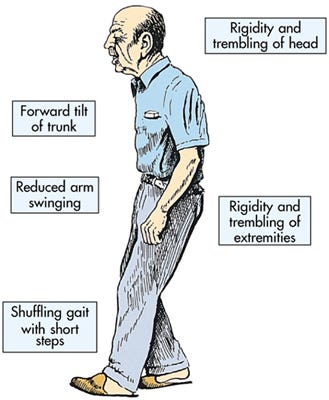
The most common recognisable symptom of Parkinson’s disease is known as a “pill rolling tremor.” In this condition, the thumb and fingers move uncontrollably in a manner resembling the rolling of a pill between the fingers. Tremors most commonly appear in the hands, arms, and legs, though other areas may be affected. Small movements of the hands and fingers may eventually be difficult. Another symptom is stambha (rigidity), in which movement becomes slow and difficult to initiate. Patients usually have to look at their feet to begin, shuffle forward and occasionally break into a trot (festination). The arms do not swing in coordination with the usual stride. The face may appear without expression (mask face), dull, or depressed; though no depression may be present. Reduced blinking is an early symptom. The voice becomes monotone and expressionless, further causing some to mistake this as depression.
Western medicine has determined the cause of Parkinson’s disease to be a loss of function of specialised cells in the brain stem which stimulate the production of the neurotransmitter, dopamine. Drugs supplying the brain with L-DOPA (a pre-cursor to dopamine) have been the mainstay of allopathic treatments of Parkinson’s disease. Ayurveda considers Kampavata as the manifestation of aggravated Vata, when Vata accumulates in brain tissues, damaging portions of the brain stem and causing altered coordination and tremors.
Dr Beckie Port writes about treating Parkinson’s disease through natural sources of L-Dopa. She mentions the risks of taking chemically synthesised L-Dopa
Levodopa is very effective, particularly in the early stages of the condition. But as Parkinson’s progresses and more brain cells are lost, more drug will need to be taken to get the same effects. And as the dose is increased to manage the symptoms of Parkinson’s the side effects themselves become unmanageable.(emphasis is mine)
Ayurveda uses Mucuna Pruriens which is a natural source of L-Dopa. L-Dopa whether natural or synthetic, is a replacement for the dopamine that the brain is no longer making. It does nothing to reverse or prevent further damage to the brain stem. Ayurvedic treatment of Parkinson’s disease is about the Vata disturbance. Ayurveda teaches that a holistic treatment regimen offers the greatest chance of success with Parkinson’s patients. In addition to using Mucuna pruriens, vata must be pacified.
Ayurvedic regimens have a lot to offer patients with Parkinson’s or other diseases. LiveRight is a startup offering solutions based on classical Ayurveda texts for the treatment of Parkison’s and other chronic ailments such as diabetes, arthritis, hypertension, migraine etc. Fix an appointment with one of our doctors today to regain your health and wellness.

Friday, 16 February 2018

Sleep Tips Offered By Top Rated Chicago Area Sleep Medicine Center


Maybe you find it hard to get to sleep each night. Perhaps you wake up after only an hour or so and cannot return to sound sleep. If so, you are not alone as this is a very common problem these days. Here are some helpful tips on better sleep from your Chicago insomnia professionals.

When sleeping is a problem, take a look at what you eat and drink. Try to cut back on stimulants like caffeine late in the day or early evening. You might try switching to decaffeinated beverages. Do not forget foods like chocolate and drinks like colas also contain caffeine. 

If you are constantly waking up at night, make your bedroom more conducive for resting. For instance, make sure you are very comfortable and that room temperature is not too cold or warm. Block out as much light as possible and consider black out drapes or curtains. Have some kind of noise in the background to drown out distractions. You can place a radio on "no channel" with loud volume for white noise.

Develop a habit or ritual each night before going to bed. This can put you in the right state of mind and can be very beneficial for sleeping. You might try taking a warm shower or bath right before bed. The goal is to reduce the amount of stimulation before one goes to bed.  Do not take smart phones or tablets to bed with you since the light emitted from such devices in a dark room may make it more difficult to fall asleep.

Staring at the clock all night long can make for a long night. Set an alarm for morning and then place the clock where you cannot see it. Also, do not worry about "not sleeping". Instead, start with relaxing the feet and gradually work your way all the up to your head.

If your sleep problem is long term, you could have medical or emotional problems. Consider seeking professional help from your local Chicago sleep center. They have trained professionals that will help you find the reason for your inability to fall asleep or stay asleep. 


Chicago Chronic Insomnia Therapy


A large number of people in the United States suffer from chronic insomnia. It is highly likely that almost everyone experiences either transient or chronic insomnia at some point during their lifespan. For local residents, cognitive behavioral treatment is often used to alleviate chronic insomnia at The Center for Sleep Medicine.


The inability to sleep will be categorized first as primary or secondary and then as acute or chronic. Primary cases are not caused by an underlying health problem, while secondary cases are often caused by health conditions and the symptoms that may occur. When sleep issues are acute, they only occur for short periods. Chronic sleep troubles are diagnosed when they last for at least three nights a week and for a month or more.

If the sleeping issue is primary and acute, there are several methods to address the issue. Mild cases, that seem to occur without repeated incidences, can be addressed with adjustments to sleeping habits. Learning relaxation techniques may also be helpful. A doctor may recommend the short term use of over the counter or prescription medications. Before you begin taking over the counter medications on your own, however, make sure you talk with your doctor.

Chronic sleeping problems that are also classified as secondary must be handled a bit differently. Your doctor must first determine how to handle the underlying condition and the symptoms that are likely causing your sleeping issues. If your sleep problems still persist, methods can include changing habits, learning new behaviors, and light therapy. Prescription and over the counter medications are often not recommended for chronic cases because they are only designed to be used on a short term, temporary basis.

Herbal and dietary supplements may also be helpful in dealing with episodes of sleeping troubles. Two common supplements are Valerian and Melatonin. Valerian is an herb that has sedative properties and can be found in different products, such as herbal tea with chamomile, and as a stand alone supplement. Melatonin is a hormone that is naturally produced by the body to induce sleep, but supplements in low doses can help sleeping troubles. Discuss these options with your doctor to ensure there are no interaction dangers with other medications you may be taking.

If you are experiencing difficulty getting to sleep or staying asleep, start keeping a journal to track each incidence and what you feel. Take this information to your doctor to help with the determination. In figuring out the cause and possible ways to help, you may be asked to attend a sleep study session.

Thursday, 5 January 2017

Tips for finding the right bulk billing doctor in Cranbourne

Diseases, accidents and ailments always come uninvited. With medicines and treatments getting expensive day by day, becoming a part of Medicare system is the best possible way out there to tackle the financial part of medical emergencies. If you are new to Cranbourne, you need to find the right bulk billing doctor to avail the benefits provided by Medicare system. There are number of ways to find bulk billing doctors Cranbourne. The most common among which are mentioned below


Local Classifieds/Directories

When you are in hunt of bulk billing doctors available within a particular area, browsing through local directories/classifieds would be a great option. In directories/classifieds you get to find the address and contact details of all the doctors in Cranbourne. In general, it might not be mentioned if they offer bulk billing services. However, you can dial up to their numbers mentioned in the directory/classified to check if they offer bulk billing services.

Internet

Internet is definitely a great source of information. To find the best bulk billing doctors Cranbourne, just go online and browse through to get the complete list. Not just that, you can even find websites that share reviews on doctors thereby helping you to find the right general physician.

Word Of Mouth

While the directories/Internet can only help you shortlist the bulk billing doctors Cranbourne, one cannot conclude if all of them are genuine ones. In such a scenario, word of mouth from any of your neighbors can help you find the right bulk billing doctor in Cranbourne. For instance, The Avenue Medical Clinic is one such clinic that most of them recommend when people ask for a good bulk billing doctor in Cranbourne.

So, what are you waiting for? Go with any of the above mentioned options and find the best bulk billing doctor nearby your location at the earliest.


Tuesday, 13 December 2016

Best relief for sufferers of sleep disorder

The Center for Sleep Medicine is pleased to announce that area residents who are suffering from one or more sleep disorders can find relief, thanks to the professional team working at The Center for Sleep Medicine. The Center has a multidisciplinary, multispecialty team of board certified sleep specialists who treat any sleep disorder known to the medical community.  Included are specialists from the fields of neurology, pulmonary medicine, psychiatry, internal medicine, pediatrics, and dental sleep medicine.

Sleep Disorder Treatment

A representative for the Chicagoarea sleep disorder center spoke to an interviewer recently, "We begin your visit to the Center for Sleep Medicine by evaluating your sleep history. You may be asked to spend the night in one of our nicely appointed bedrooms for a sleep study. The completed study is reviewed and interpreted by one of the professionals on our team. An assessment is made and therapy is recommended. The primary care physician receives the information from the Center with the patient’s approval."

He continues, "Professionals at the sleep medicine facility have the skills and experience to not only seek answers to questions about common sleep disorders such as sleep apnea and insomnia, but to provide solutions which improve the quality of sleep in patients. The therapeutic measures that are suggested may rely on lifestyle changes, as well as more traditional methods."

Research studies are pointing out the links between poor sleeping habits and many of the common diseases today. Lack of quality sleep may compromise the body's ability to fight off conditions such as cancer, depression, heart problems, and obesity. There may also be a link between diabetes and sleep disorders.

Learn more about sleep disorders and how they may be alleviated by paying a visit to the web pages at http://www.sleepmedcenter.com today. 

Tuesday, 29 November 2016

How To Stop Snoring With Chicago Area Sleep Medicine Center

Chronic snoring can be a problem for everyone in a home. The person who snores may not get adequate rest. Those who live with a snorer probably do not get the rest they need, either. Fortunately, there are ways to deal with this issue. Many professionals life’s work is devoted to helping those who suffer from chronic snoring.  Therapies are available that benefit people who are afflicted with chronic snoring.


One of the best things that a snorer can do is to get professional help. Scheduling an appointment at The Center for Sleep Medicine would be a wise strategy for a snorer. The professionals at The Center for Sleep Medicine treat snoring on a daily basis. CPAP Therapy and Oral Appliances are the most common remedies for snoring.

Sometimes, snoring is a result of an existing health problem.  Snoring is often a symptom of obstructive sleep apnea.  Appropriate testing is available at The Center for Sleep Medicine to determine if a person has this condition. 

People are pleased to learn that there are treatments designed to combat snoring and sleep apnea. A professional might recommend an oral appliance that can be worn at night. Such an appliance keeps the airway open when a person is sleeping. As a result of having an open airway snoring will no longer occur.  Also, a professional make recommend CPAP therapy in lieu of an oral appliance based upon the severity of one’s sleep apnea.  CPAP therapy also eliminates snoring.

The divorce rate among men that snore is significantly greater than men who do not snore.


Those who suffer from a snoring problem have many options from which to choose. Visiting a professional is always a good idea. Dealing with chronic snoring is beneficial to everyone involved.

Friday, 21 October 2016

Chronic Insomnia and the Center for Sleep Medicine

Lack of sleep is a common problem that many people face each day. In fact, it occurs to everyone at some point in life. Yet, for some people it can become chronic and totally disrupt one's life. Here are some suggestions to aid you in getting a better night’s sleep from the professional sleep specialists at The Center for Sleep Medicine.
                                 

A sleeping problem may be caused by going to bed and getting up at different times during the course of the week.  Having the same sleep schedule every day of the week can help.  For example, if you work at night and sleep during the day five days a week you should maintain that same sleep schedule for the two days you do not work.

As soon as you get home from work in the evening you may be tempted to take a nap. After all, you might feel tired and sleepy and a nap can make you feel much better. However, this can make it very hard for you to fall asleep or stay asleep during the night.  Avoiding such naps may make getting to sleep and staying asleep easier.

Perhaps you like to watch television and snack in the bedroom. This is very convenient but it could be making it hard for you to sleep at night because one associates going to bed with staying awake not going to sleep.  A bedroom should be used for sleep and intimacy only.  Avoid activities in the bedroom that will keep you awake.

Eating just prior to bedtime can cause sleep problems. For example, many people like to snack on foods like sweets and potato chips late at night. These foods contain carbohydrates that raise blood sugar which in turn releases stress hormones, making sleep difficult. If you must eat before bedtime, try foods high in protein and tryptophan like turkey, roasted soybeans or pumpkin seeds.

Before bedtime, limit your fluid intake, especially beverages that contain sugar or caffeine. Start a regular exercise routine during daytime hours to lower stress. If you already practice good sleep hygiene but are unable to sleep well please contact The Center for Sleep Medicine. They provide sleep evaluations and effective therapy for chronic insomnia.